
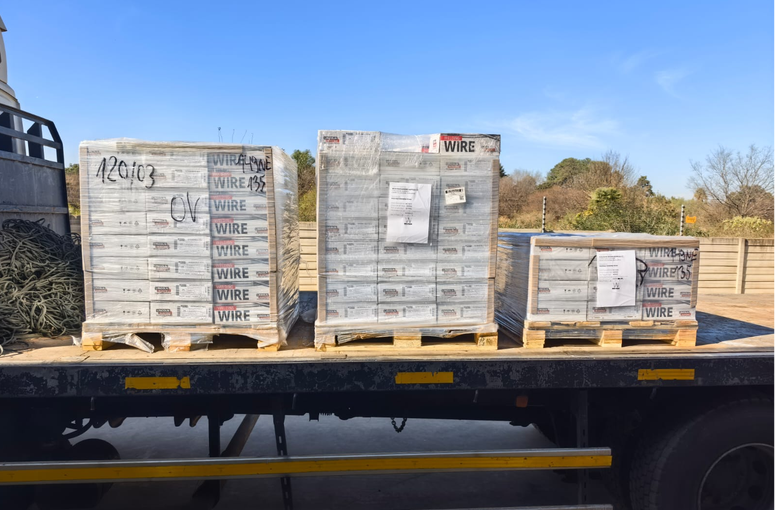
Mining projects rely on more than heavy equipment and skilled personnel. Behind every successful operation is a well-managed supply chain that ensures materials, machinery, spare parts and consumables arrive where they are needed, when they are needed. Delays in procurement or transportation can quickly lead to costly downtime, missed production targets and increased operational expenses.
Across Africa, mining companies often face unique logistical challenges. Remote mine locations, border crossings, long transport routes and varying infrastructure standards all add complexity to sourcing and delivering equipment. These challenges make mining logistics solutions an essential part of modern mining operations rather than simply an administrative function.
At Wolfram, supply chain support extends beyond transporting goods. By combining procurement, warehousing, equipment consolidation and logistics coordination, mining businesses gain greater visibility over their supply chains while reducing unnecessary delays and costs. Well-planned mining warehousing solutions and efficient logistics create a more reliable supply chain that keeps projects moving from exploration through to production.
The Challenges of Mining Supply Chains in Africa
Mining projects operate in environments where every hour of downtime has financial consequences. Whether developing a new mine or supporting an existing operation, delays in receiving critical equipment can halt entire production schedules.
Several factors contribute to these challenges:
- Remote operating locations
- Long international shipping routes
- Customs clearance requirements
- Limited transport infrastructure
- Multiple suppliers across different countries
- Unpredictable lead times
- Weather-related disruptions
- Inventory management difficulties
Managing these variables requires far more than arranging transport. Companies need complete mining logistics solutions that coordinate procurement, storage, consolidation and delivery while anticipating potential disruptions before they impact operations.
For mining businesses operating throughout Southern and Central Africa, effective planning has become one of the most valuable tools for maintaining production schedules.
Why Supply Chain Efficiency Matters
A mining operation depends on thousands of individual components working together. If even one critical part fails to arrive on time, production may slow or stop completely.
Supply chain efficiency directly affects:
- Equipment availability
- Production continuity
- Maintenance scheduling
- Inventory costs
- Contractor productivity
- Capital expenditure
- Operational profitability
Rather than ordering materials independently from multiple suppliers, many organisations now adopt integrated procurement and logistics strategies that reduce duplication and improve visibility throughout the purchasing process.
A coordinated mining supply chain Africa strategy helps businesses understand exactly where materials are located, when deliveries will arrive and how inventory can be managed more effectively.
Equipment Lead Times Can Impact Entire Projects
Large mining equipment is often manufactured internationally and requires lengthy production and shipping schedules. Even relatively small components may need to be imported from specialised manufacturers.
Typical mining purchases may include:
● Winches
● Crushers
● Scrapers
● Electrical equipment
● Valves
● LED lights
● Motors
● Bolts & Snatch Blocks
● Personal protective equipment
● Maintenance consumables
Each supplier typically works on different manufacturing schedules and shipping timelines. Without proper coordination, deliveries may arrive weeks apart, creating unnecessary storage costs or delaying installation.
This is where mining equipment consolidation becomes particularly valuable.
Instead of shipping multiple smaller consignments separately, equipment from various suppliers can be consolidated into larger shipments before final delivery to site.
This approach improves scheduling while reducing freight costs and administrative complexity.
How Equipment Consolidation Reduces Delays
Mining projects frequently source equipment from numerous manufacturers located across different countries. Without consolidation, project managers must coordinate multiple freight providers, customs documentation and delivery schedules simultaneously.
Equipment consolidation simplifies this process.
Rather than receiving separate deliveries over several weeks, equipment is collected, inspected and combined into coordinated shipments before transport to site.
The advantages include:
Reduced Freight Costs
Combining multiple orders into fewer shipments lowers transport costs and reduces duplicated handling fees.
Better Delivery Coordination
Project teams receive equipment in logical installation sequences rather than random delivery dates.
Improved Quality Control
Equipment can be inspected before dispatch to identify shortages or damage early.
Simplified Customs Processing
Fewer shipments generally result in more efficient customs documentation and border clearance.
Lower Administrative Burden
Procurement teams manage fewer transport providers and shipping documents.
For large mining developments, mining equipment consolidation improves planning while reducing uncertainty throughout the procurement process.
The Value of Strategic Warehousing
Storage is no longer simply about finding space for equipment. Modern mining warehousing solutions provide an important link between procurement and site delivery.
Strategically located warehouses offer several operational benefits.
Inventory Availability
Critical spare parts remain accessible without requiring urgent international orders.
Flexible Delivery Scheduling
Equipment can be released according to project timelines rather than shipping schedules.
Reduced Site Congestion
Instead of delivering all equipment directly to the mine simultaneously, staged deliveries improve site organisation.
Improved Stock Management
Warehouse systems provide visibility into inventory levels, reducing unnecessary purchasing.
Protection of High-Value Equipment
Proper storage reduces the risk of weather damage, theft and deterioration before installation.
Mining companies increasingly use warehousing as a strategic planning tool rather than simply a storage facility.
Procurement and Logistics Must Work Together
One of the biggest causes of supply chain inefficiency occurs when procurement and logistics operate independently.
Purchasing teams may focus on supplier pricing while logistics teams concentrate on transportation, but without coordination the overall project can still experience delays.
An integrated approach ensures:
- Procurement considers delivery timelines.
- Logistics planning begins before equipment is ordered.
- Warehousing capacity matches purchasing schedules.
- Transport routes are selected according to project priorities.
- Documentation is prepared before shipments leave suppliers.
This level of coordination allows mining companies to respond more effectively when unexpected challenges arise.
Professional mining logistics solutions bring procurement and logistics together into a single coordinated process that supports operational efficiency.
Managing Supply Chains Across African Borders
Operating throughout Africa introduces additional logistical considerations that are less common in domestic projects.
These may include:
- Cross-border permits
- Customs documentation
- Import regulations
- Different transport standards
- Regional infrastructure limitations
- Variable border processing times
Without experienced logistics coordination, border delays can quickly affect construction schedules or production targets.
An established mining supply chain Africa strategy considers these factors from the outset, allowing businesses to plan realistic delivery schedules while reducing unexpected disruptions.
Understanding regional transport networks and regulatory requirements provides a significant advantage when coordinating large mining projects across multiple countries.
Visibility Improves Decision Making
Modern mining projects generate enormous amounts of operational data. Supply chains should provide the same level of visibility.
Project managers benefit from knowing:
- Current shipment locations
- Warehouse inventory levels
- Supplier manufacturing progress
- Estimated delivery dates
- Customs clearance status
- Transport milestones
This visibility enables proactive decision-making rather than reactive problem-solving.
When delays occur, alternative plans can often be implemented before production is affected.
Effective mining logistics solutions provide greater transparency throughout the procurement and delivery process, helping project teams make informed operational decisions.
Reducing Downtime Through Better Planning
Downtime remains one of the largest avoidable costs in mining.
Equipment failures cannot always be prevented, but supply chain delays often can.
Better planning supports:
- Preventative maintenance programmes
- Scheduled equipment replacements
- Spare parts availability
- Contractor scheduling
- Shutdown planning
- Expansion projects
Rather than waiting for urgent orders after equipment fails, businesses can maintain critical inventory through well-managed mining warehousing solutions.
This proactive approach reduces emergency freight costs while improving equipment availability.
Sustainability Through Smarter Logistics
Sustainability has become an increasingly important consideration within mining operations.
While environmental initiatives often focus on production processes, supply chain efficiency also contributes to sustainability objectives.
Consolidated shipments reduce transport frequency.
Improved warehouse planning minimises unnecessary inventory movements.
Accurate procurement reduces excess purchasing and material waste.
Better route planning improves transport efficiency.
These operational improvements help mining businesses reduce costs while supporting broader environmental objectives.
Why Partnering with Experienced Supply Chain Specialists Matters
Mining supply chains have become increasingly complex.
Projects require specialist procurement knowledge, international logistics coordination, inventory management and warehousing expertise.
Working with experienced partners allows mining companies to focus on production while specialists manage the movement of equipment and materials.
Professional support provides:
- Procurement coordination
- Supplier management
- Freight planning
- Customs support
- Warehouse management
- Equipment consolidation
- Delivery scheduling
- Supply chain visibility
These integrated services reduce operational risk while improving project reliability.
Rather than managing dozens of independent suppliers and transport providers, mining companies benefit from a coordinated supply chain designed around operational requirements.
How Wolfram Supports Mining Supply Chains
Wolfram understands the operational demands facing mining companies throughout Africa.
Its integrated services combine procurement support, logistics coordination, warehousing and mining equipment consolidation to create efficient supply chains that reduce delays and improve operational performance.
By offering tailored mining logistics solutions, Wolfram helps clients manage sourcing, transportation and storage through a coordinated approach that improves visibility and supports project timelines.
Whether supporting exploration programmes, mine development projects or ongoing production operations, Wolfram’s expertise helps organisations simplify complex logistics while maintaining reliable equipment availability.
Conclusion
Successful mining operations depend on more than production equipment alone. Every project relies on a supply chain capable of delivering materials, machinery and critical components efficiently and consistently.
As mining projects continue to expand across Africa, the importance of integrated procurement, warehousing and logistics continues to grow. Effective mining warehousing solutions, coordinated mining equipment consolidation, and reliable mining logistics solutions help businesses reduce downtime, control costs and maintain production schedules.
With extensive experience supporting the mining supply chain Africa, Wolfram provides practical, dependable solutions that help mining companies overcome logistical challenges and keep projects moving forward with confidence.
Recent Comments